

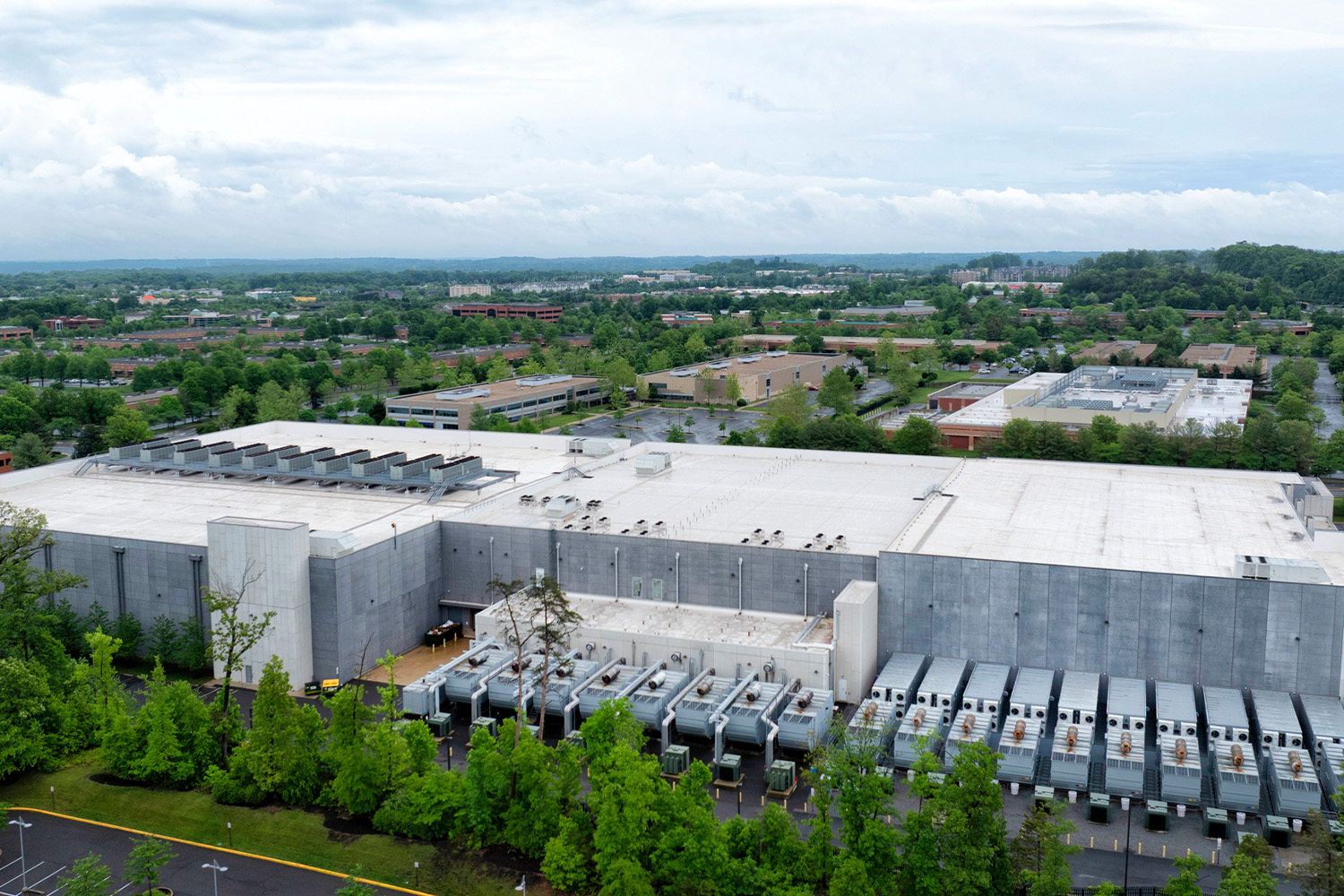
Data Center Roofing roof planning built from the roof condition.
The roof review looks at water entry, membrane life, safety, access, equipment zones, and the timing needed to keep the building operating.
Commercial Roofing Contractors of Boston keeps the roof plan focused on the condition in front of the team and the next step that fits the building.
Commercial roof scope, documentation, access planning, and weather-aware scheduling for commercial real estate & reits.
Boston's data center market is defined by the region's extraordinary concentration of financial services, healthcare, biotech, and academic computing demand. Fidelity Investments, State Street Corporation, and Liberty Mutual Insurance maintain substantial private data center infrastructure within the Route 128 belt and inner suburbs, and the academic computing demands of MIT, Harvard, and the constellation of universities in the greater Boston region create institutional data center demand that is both substantial and technically sophisticated. Cologix operates colocation facilities in the Boston area, and the region's financial services density drives Tier III and Tier IV uptime requirements across a significant portion of the market. The South End, Innovation District, and Route 128 office and R&D parks represent the geographic centers of Boston's enterprise data center activity.
Boston's climate creates the most demanding combination of weather challenges for data center roofing of any major U.S. market. The city averages approximately 43 inches of precipitation annually, including 43 to 48 inches of annual snowfall with major nor'easter events that can deposit 24 to 30 inches in a single storm. Nor'easters also produce sustained 50 to 60 mph winds with gusts above 80 mph — wind loads that require careful ASCE 7 analysis for every data center roof project in the metro area. The combination of high snowfall, freeze-thaw cycling (50 to 60 events per year), and wind-driven rain creates a year-round roofing challenge that makes Boston one of the most rigorous test environments for data center roof assemblies in the country.
CRAC unit penetration management at Boston data centers must address the freeze risk that is essentially absent in most southern and western markets. In January and February, Bostonian ambient temperatures regularly fall to 5°F to 15°F. CRAC unit condensate drain lines that exit through roof penetrations to the exterior can freeze at these temperatures, forcing condensate back into the CRAC unit and potentially shutting it down — a data center outage cause that is entirely preventable with proper detailing. Heat-traced condensate drain lines with thermostatically controlled activation, routed to internal drainage rather than external drops wherever possible, are the correct design for Boston data centers with rooftop CRAC units.
Nor'easter preparedness is a data center roofing specialty in the Boston market. The financial cost of a 2-hour to 4-hour data center outage for a Boston-area financial services firm — measured in missed trades, SLA penalties, and client confidence — creates an extremely low tolerance for any roofing failure mode that could allow water infiltration during a nor'easter. Pre-winter roof inspections in November, specifically targeting parapet cap flashing integrity, pitch pocket fill condition, and CRAC curb base flashing adhesion, are a standard annual investment for data center operators in the Boston area. The inspection fee is trivially small compared to the potential downtime cost of a January leak event during peak trading hours.
Snow removal from Boston data center roofs requires a protocol that balances the structural protection need (removing snow before it exceeds design load) against the membrane protection need (not puncturing the membrane with shovels or ice choppers). Many Boston data center operators have standing agreements with their roofing contractors for post-storm snow monitoring and selective removal service — covering areas where accumulation rates are highest and drainage is most constrained. Rooftop HVAC areas tend to accumulate snow more quickly than open field areas because equipment creates wind eddies that deposit drifting snow. These areas should be prioritized in any snow removal protocol.
Generator systems at Boston data centers face a specific challenge: the Massachusetts Department of Environmental Protection (MassDEP) Air Quality program applies stringent NOx and PM2.5 emission limits to standby generators over 250 bhp. Large financial services data centers that require multi-megawatt backup generation face a permitting process that limits annual operating hours and may require selective catalytic reduction (SCR) or diesel particulate filter (DPF) systems on generators above certain sizes. These emissions control systems affect exhaust stack design — larger stack diameters, potentially different exit velocities — which means the roof penetration for generator exhaust at a Boston data center may be more complex than at comparable facilities in less regulated markets.
The Route 128 corridor data centers, including those in Burlington, Waltham, and Woburn, sit at slightly higher elevation and more open exposure than the urban Boston core, creating higher effective design wind speeds due to reduced urban terrain shielding. These suburban campus data centers, many of which were built in the 1990s or early 2000s in commercial parks designed for general office and R&D use, are now in the re-roofing cycle with the complication that their original roof attachment designs may be inadequate for current ASCE 7 wind speed requirements. Re-roofing these facilities is an opportunity to bring the attachment design to current code — and for data center operators, it's an opportunity to establish the enhanced waterproofing details that weren't standard practice when the original roofs were installed.
TPO 80 mil is the dominant choice for Boston-area data center roofs, with EPDM maintaining a presence on retrofit projects where its cold-temperature flexibility provides practical installation advantages in winter work windows that can't always be scheduled for spring or fall. The debate between TPO and EPDM in Boston's climate comes down to installation conditions and long-term seam performance: TPO heat-welded seams are stronger than EPDM adhesive-set seams in the freeze-thaw cycling that Boston delivers, but heat-welded TPO requires a minimum ambient temperature that can be difficult to achieve in a January or February emergency repair window. For planned work, TPO is preferred; for emergency repair, EPDM's cold-temperature compatibility is a practical advantage.
Long-term data center roof management in Boston benefits from the financial services sector's rigorous facilities management standards. Many Boston-area financial data centers follow the FINRA or FFIEC guidance frameworks for facilities operations, which include explicit provisions for building envelope maintenance documentation. Semi-annual roof inspections, annual thermographic surveys, and documented response to all identified deficiencies create a maintenance record that satisfies both the regulatory framework and the insurance underwriter requirements. This culture of documented, proactive maintenance is the single most effective strategy for extending data center roof life in Boston's demanding climate.
The best approach is to route CRAC condensate to an internal drain rather than an external roof drain drop, eliminating the exterior exposure entirely. Where internal routing isn't possible, the external drain line should have thermostatically controlled electric heat trace tape from the CRAC unit drain pan through the roof penetration to a point beyond the insulation zone, plus a drip edge detail that prevents ice formation at the drain exit point. The heat trace should be wired to the same panel as the CRAC unit it serves, monitored for trace element continuity annually, and rated for the 5°F minimum ambient temperature that Boston occasionally reaches in January or February.
The standard Boston financial services data center nor'easter protocol includes: pre-season inspection in early November targeting all parapet flashings, pitch pockets, and HVAC curb flashings; pre-storm inspection within 24 hours of a predicted significant nor'easter; a post-storm inspection within 48 hours of storm passage while the building is still in the high-alert state; and a drain-clear inspection within 72 hours to verify drainage before the next potential precipitation event. Facilities with active roof maintenance contracts typically have their contractor on call during nor'easter season with guaranteed 2-hour emergency response. Document each inspection with photos and store the records with the facility's building management system.
A 1995-era Route 128 commercial building being re-roofed for data center use should be upgraded to: 80-mil TPO or 45-mil EPDM with current manufacturer warranty, insulation increased to R-25 or better (original buildings typically have R-12 to R-20), drain capacity evaluated and upgraded if insufficient for current code requirements, all penetrations re-flashed to current detail standards, parapets and coping caps replaced or resecrued with mechanical fasteners at 12-inch centers or less, and FM Global wind uplift recalculated for current ASCE 7 wind speed maps (which are higher than 1995 standards in the Boston area). The re-roofing project is also the right time to add the penetration survey drawing that identifies every through-roof element with coordinates — documentation that original 1995 buildings typically lack.
The most common causes of winter roof leaks at Boston data centers are: (1) ice damming at parapet walls where rooftop HVAC exhaust creates localized warm zones that melt snow, which then refreezes at the cold parapet base and backs up under base flashings; (2) wind-driven rain infiltration at parapet cap flashing joints that were relying on sealant rather than mechanical fastening; and (3) condensate line freeze in CRAC drain systems without adequate heat trace. All three failure modes are preventable — and all three are primarily maintenance and specification issues rather than unforeseeable weather damage. The November pre-winter inspection is specifically designed to catch these developing conditions before the winter season makes them active leaks.