

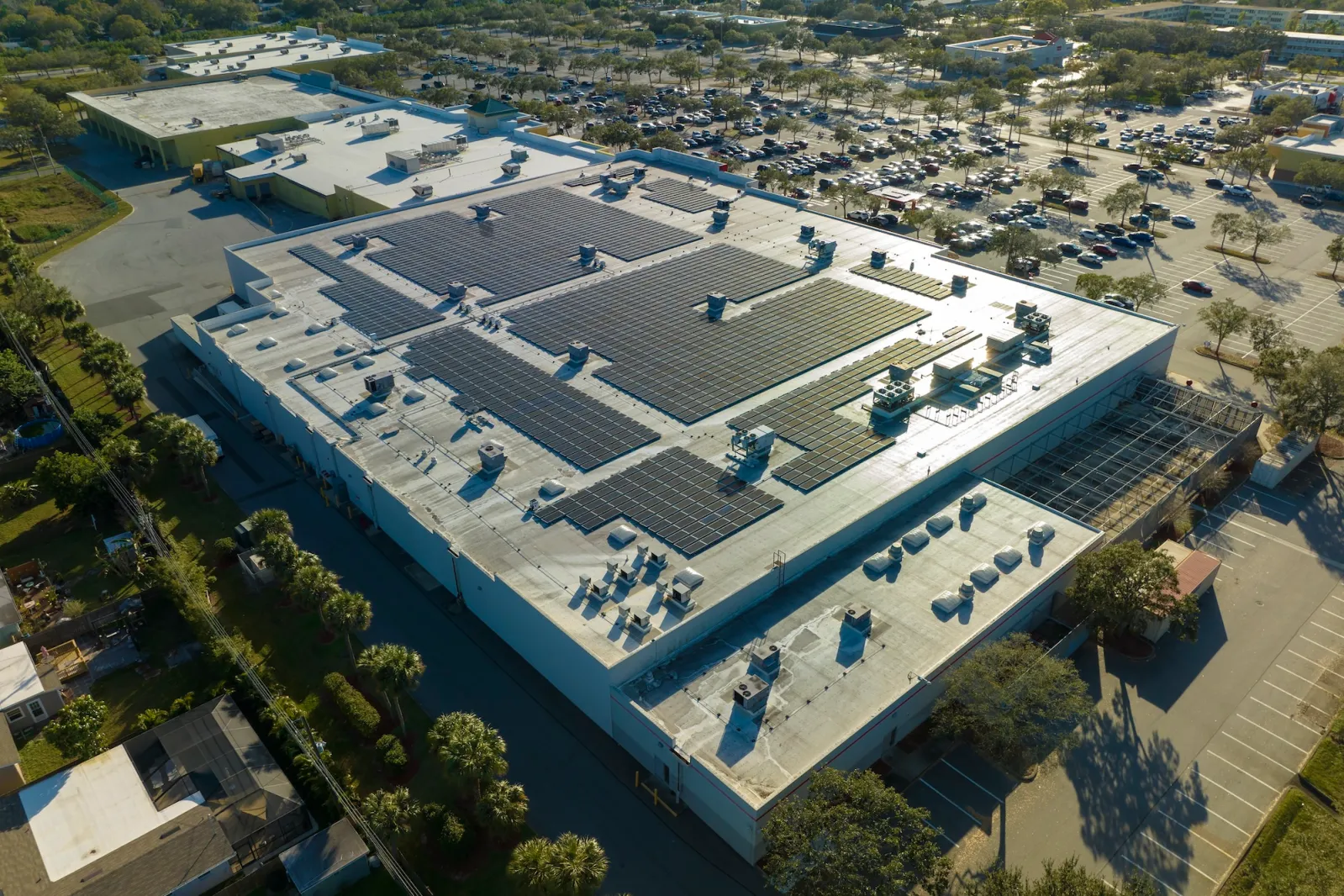
DST Roofing Services roof planning built from the roof condition.
The roof review looks at water entry, membrane life, safety, access, equipment zones, and the timing needed to keep the building operating.
Commercial Roofing Contractors of Boston keeps the roof plan focused on the condition in front of the team and the next step that fits the building.
Commercial roof scope, documentation, access planning, and weather-aware scheduling for commercial real estate & reits.
Boston's commercial real estate market draws DST sponsor interest for its institutional tenant quality — life science, higher education, financial services, and healthcare tenants who sign long-term leases and create the kind of income certainty that 1031 exchange investors seek. DST operators closing on suburban Boston medical office buildings, net-leased retail along Route 1 or Route 9, or light industrial assets in the 128 Belt typically arrive with sophisticated legal and financial teams but without a specific Boston commercial roofing contractor relationship. The Greater Boston roofing market is among the most demanding in the DST universe — the Northeast's full four-season climate, the age of the commercial building stock, and a contractor market that serves an extremely dense metro area create conditions that require specialized local knowledge to navigate effectively.
Roof condition assessments for Boston DST acquisitions must address the Northeast's most challenging roofing failure modes. Massachusetts commercial roofs face ice damming risk from the freeze-thaw cycles that characterize Boston winters, snow loading that can accumulate rapidly during nor'easters, the sustained wind exposure of coastal and near-coastal locations, and the high summer humidity that accelerates moisture intrusion at any compromised seam or penetration. The offering memorandum's property condition section should include specific assessment of the roof edge and parapet flashing systems — a frequent ice dam formation point on Boston commercial buildings — along with drainage capacity, membrane condition, and a remaining useful life estimate that reflects New England's weather demands rather than national averages.
Capital reserve modeling for Boston DST offerings is complicated by the fact that Greater Boston's commercial roofing costs are among the highest in the country. Labor rates in the Boston metro reflect both the area's high cost of living and the union labor requirements that apply to many commercial projects in Massachusetts. A DST syndication team applying Sunbelt or Midwest cost benchmarks to a Massachusetts commercial roofing replacement is potentially underestimating by 40 to 60 percent — a gap that can represent a six-figure shortfall on a large commercial building. Local contractor input on current Massachusetts labor and materials costs is not optional for an accurate reserve model; it is the foundational data that makes the reserve credible to sophisticated Boston-area investors.
Boston DST deals often involve properties where the 1031 exchange timeline intersects with the Northeast's seasonal construction calendar. Fall and winter in Boston limit the windows when roofing work can be performed — below-freezing temperatures constrain adhesive applications, and the logistics of working on occupied buildings during the holiday season add complexity. A DST sponsor acquiring a Boston-area property needs a roofing contractor who understands the seasonal constraints and can sequence any pre-closing work or early hold period maintenance to align with the limited construction windows available in a New England fall or spring.
Post-acquisition roof management for Boston DST assets requires the operator to treat nor'easter season — roughly November through March — as a period of elevated operational risk. Heavy snow events can load flat commercial roofs rapidly, and the wet, heavy snow that characterizes many Greater Boston snowstorms is far more stressful to flat-roof systems than the dry, lighter snow of inland markets. A standing relationship with a Boston commercial roofing contractor that includes snow monitoring and emergency response provisions for major nor'easters is operational best practice for any DST operator managing a flat-roof commercial asset in Greater Boston. The passive structure of the DST means the operator must be prepared to act unilaterally and quickly when a 24-inch snow event arrives.
Out-of-state DST operators managing Boston properties face Massachusetts-specific regulatory requirements that add complexity to what might seem like straightforward roofing maintenance. Massachusetts building code, local permitting requirements in each of the over 350 municipalities in the Commonwealth, and the specific licensing requirements for commercial roofing contractors in Massachusetts all differ from most other states. An operator from Texas or California who engages a national facilities management company without local Massachusetts roofing subcontractors may encounter permitting delays and code compliance issues that a local contractor with established relationships in the specific municipality would have navigated routinely.
Boston DST acquisitions concentrate in life science flex industrial, suburban medical office, NNN retail, and mixed-use properties that benefit from the metro area's exceptional demographics and institutional employment base. The Route 128 life science corridor, the Route 9 retail strip, the North Shore and South Shore suburban medical office markets, and the Merrimack Valley industrial parks are all active DST acquisition areas. Life science flex buildings have particularly demanding roofing requirements given the HVAC density, exhaust system penetrations, and air quality requirements that characterize laboratory and research facilities.
Boston's climate risk profile is driven primarily by the nor'easter exposure that makes it one of the most consistently storm-tested commercial roofing environments in the DST market. A single major nor'easter can deliver 24 to 30 inches of wet, heavy snow — far more than most flat commercial roofs are designed to hold in a single event. Out-of-market DST operators from the South or the Mountain West who have managed commercial properties through their home market's weather events are often genuinely shocked by the stress that a Boston snowstorm places on flat-roof systems. The operators who manage through these events cleanly are the ones who have been conducting biannual inspections, clearing drains before each winter, and monitoring their roofs through accumulation events with a contractor on call.
A roof failure or significant leak during a Boston DST hold period creates compounding problems because the property's tenants — life science companies, medical practices, financial services firms — have very limited tolerance for facility disruptions. A leak affecting a clinical laboratory's controlled environment or a financial firm's server room is not a minor maintenance issue; it is a potential regulatory and liability event that requires immediate response. The DST operators who successfully manage these situations are the ones who can demonstrate that they acted within hours, that their contractor was on site same-day, and that they had a documented maintenance record showing ongoing stewardship of the property. That evidence is built over the life of the maintenance relationship, not assembled retroactively after a crisis.