

Airport Terminal & Aviation Facility Roofing in Boston, MA

Airport Terminal & Aviation Facility Roofing properties need roof planning that accounts for occupancy, access, staging, rooftop equipment, tenant sensitivity, and the building's operating rhythm.

Property Types

Airport Terminal & Aviation Facility Roofing roof planning built from the roof condition.

Airport Terminal & Aviation Facility Roofing properties need roof planning that accounts for occupancy, access, staging, rooftop equipment, tenant sensitivity, and the building's operating rhythm.

The roof path may involve leak repair, preventive maintenance, coating review, recover planning, or full replacement depending on the age and condition of the assembly.

Commercial Roofing Contractors of Boston helps organize those choices into clear next steps for commercial buildings in Boston, MA.

Acres of low-slope deck, jet-blast and harbor wind, and a building that never closes — aviation roofing for Boston Logan and beyond.

A building that cannot pause for a roof

Airport roofing starts from a premise no standard commercial schedule allows: the building never stops. Boston Logan International Airport in East Boston is New England's dominant hub, moving well over 40 million passengers a year across a tight harbor-side site managed by Massport, and its terminals, jet bridges, and gate concourses operate around the clock every day of the year. Every access point, every material hoist, and every crew movement has to be planned with the airport's facilities team, the FAA Part 139 safety program, and TSA security where the work touches secure areas. We build that coordination into the scope before the contract is signed, not after the trucks arrive. Logan's ongoing terminal modernization, its cargo and ground-transportation expansions, and the dense hotel and rental-car campus around the field mean there is almost always aviation roof work in motion here, and all of it runs under the same nonnegotiable rule: operations come first.

The roof itself is unlike a normal commercial deck

Terminal and concourse roofs are vast, nearly flat low-slope expanses, which makes drainage design the whole ballgame and drives ponding tolerance close to zero — standing water on a roof this large becomes a structural load and a leak source fast. Most terminal reroofing here uses a TPO or PVC single-ply membrane over a tapered insulation package engineered to move water positively to the drains and overflows. Airside roofs add jet blast and the steady wind coming off Boston Harbor, so membrane adhesion and any ballast have to be specified well beyond what a comparable inland warehouse would need; an edge or seam that lifts near an active apron is not a small problem. Terminal mechanical systems are also far denser and heavier than ordinary commercial, producing a high count of curbed penetrations and large equipment screens, each of which has to be flashed as an engineered detail rather than a stock pattern. We walk the roof with the facilities engineer and develop the spec from the deck, the loads, and the operational limits we actually find.

Beyond the terminal: the rest of the campus

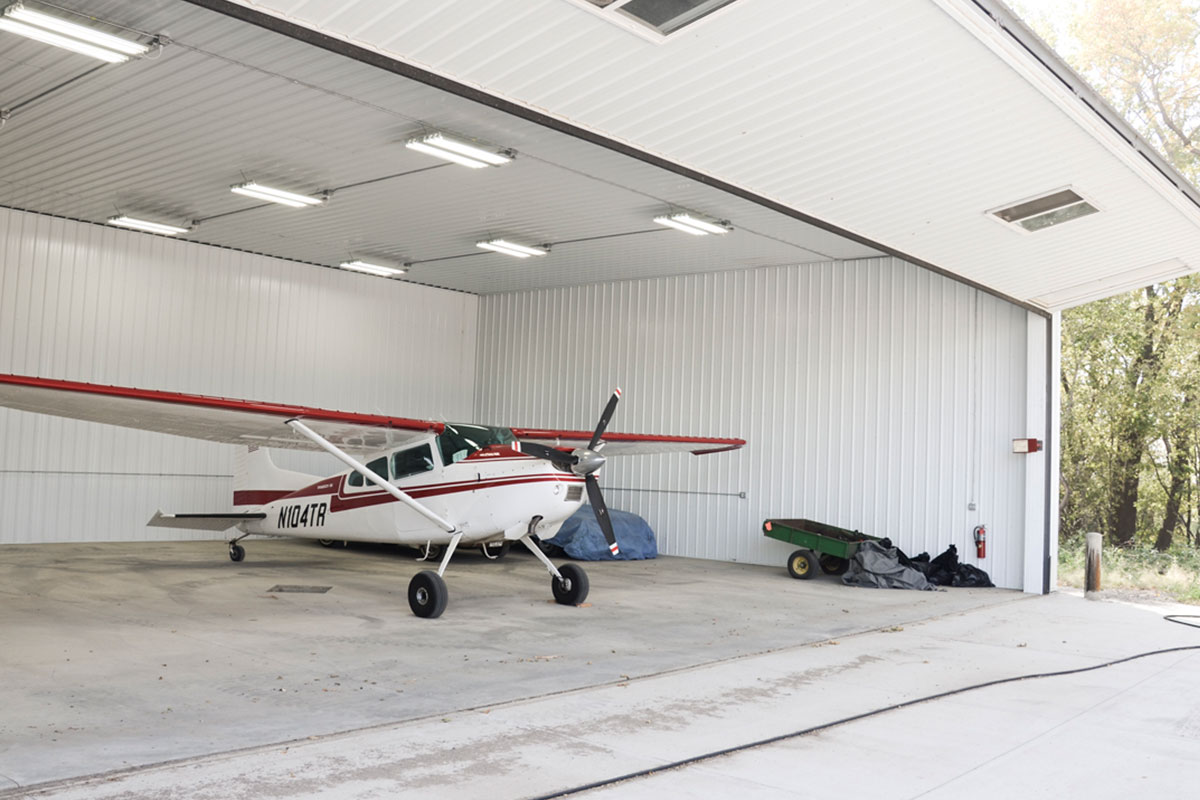
Aviation-adjacent buildings carry their own demands while keeping the airport-access requirement intact. Cargo facilities, the consolidated rental-car center, FBO and aircraft-maintenance hangars, and the airport hotels each present a different roof, but badging and security coordination never go away anywhere on the campus. High-bay hangars in particular are large clear-span structures whose wind-uplift loads demand specific fastening patterns and seam geometry, often pushing the spec toward standing-seam metal on new buildings. Our crews understand that authorization at any part of an airport is planned for in advance, never discovered on site.

Reliever and regional fields serving the region

  • Worcester Regional Airport (ORH) — regional reliever roughly 45 miles west of Boston
  • Hanscom Field (BED) — the area's primary general-aviation and corporate-jet field in Bedford
  • Manchester-Boston Regional Airport (MHT) — regional alternative about 55 miles north in New Hampshire

At these general-aviation fields the security protocols are lighter than at Logan, but the structures — high-bay hangars and clear-span maintenance buildings — are often more demanding to roof, and we spec and install those systems across Massachusetts and the surrounding region.

Foreign object debris is the other constant that shapes how we work on or near an airfield. Loose fasteners, membrane scrap, insulation board offcuts, and even a stray cap sheet can be drawn into a jet engine or thrown by prop wash, so airside and apron-adjacent roofing runs under strict FOD control: tethered tools, covered and counted material, continuous cleanup, and a sweep of the work area at the end of every shift before crews leave. We plan staging and waste removal so nothing migrates toward a taxiway, and we treat FOD discipline as part of the safety plan the airport signs off on, not an afterthought. On an active field the cleanliness of the work area is a flight-safety issue, and we run the job accordingly.

Phasing, dry-in, and zero surprises airside

On an operational airfield we work to a phased plan approved by airport operations, scheduling deliveries, crane lifts, and any airside work into the windows the facilities department and the Part 139 coordinator authorize, coordinated with the NOTAM process when required. Because so much of the deck sits over occupied terminal space and irreplaceable operations, dry-in discipline is absolute — we never open more roof than we can make watertight the same day, and we close out each shift fully sealed against the next harbor squall. Crew members are not mobilized airside without confirmed authorization; that is a baseline we enforce, not a favor we ask, and it is exactly why airport owners can let us work without slowing the operation down.

Airport & Aviation Roofing Questions

We develop a phased plan approved by airport operations and the FAA Part 139 coordinator, scheduling deliveries, crane lifts, and any airside work into authorized windows and coordinating with the NOTAM process when required. Operations come first and the coordination is built into the project setup.

Most terminal reroofing here uses TPO or PVC single-ply over a tapered insulation system engineered to improve drainage and eliminate ponding on these vast low-slope decks. New high-bay aviation structures and hangars often call for standing-seam metal. We finalize the spec after walking the roof with your facilities engineer.

Terminal mechanical density runs far higher than standard commercial. Our pre-project survey documents every penetration, curb height, and clearance, and oversized equipment curbs and complex through-penetrations are detailed individually rather than with stock patterns.

Yes, with proper badging and in full coordination with airfield operations. Airside work requires added pre-planning and crew credentialing, which we build into the bid timeline. We do not mobilize crew airside without confirmed authorization.

Yes. Hangar roofing — from a single-bay private hangar to a multi-unit FBO complex at fields like Hanscom or Worcester — is a regular part of our work. High-bay clear-span structures have specific uplift and thermal-movement characteristics, and we spec and install systems built for them.

  • Cold Storage Roofing
  • K12 School Roofing
  • Data Center Roofing
  • Car Wash Facility Roofing
  • Event Venue Roofing
  • Retail Roofing
  • Modified Bitumen Roofing
  • Emergency Tarp Dry
Roof access, water movement, membrane age, prior repairs, flashing details, drainage, penetrations, and operating constraints shape the first recommendation.
The next step follows the roof condition. Some buildings need targeted repair, some need maintenance, and some need replacement or coating review.
Useful details include the roof concern, photos if available, building access notes, tenant sensitivity, and any deadline tied to the property.