

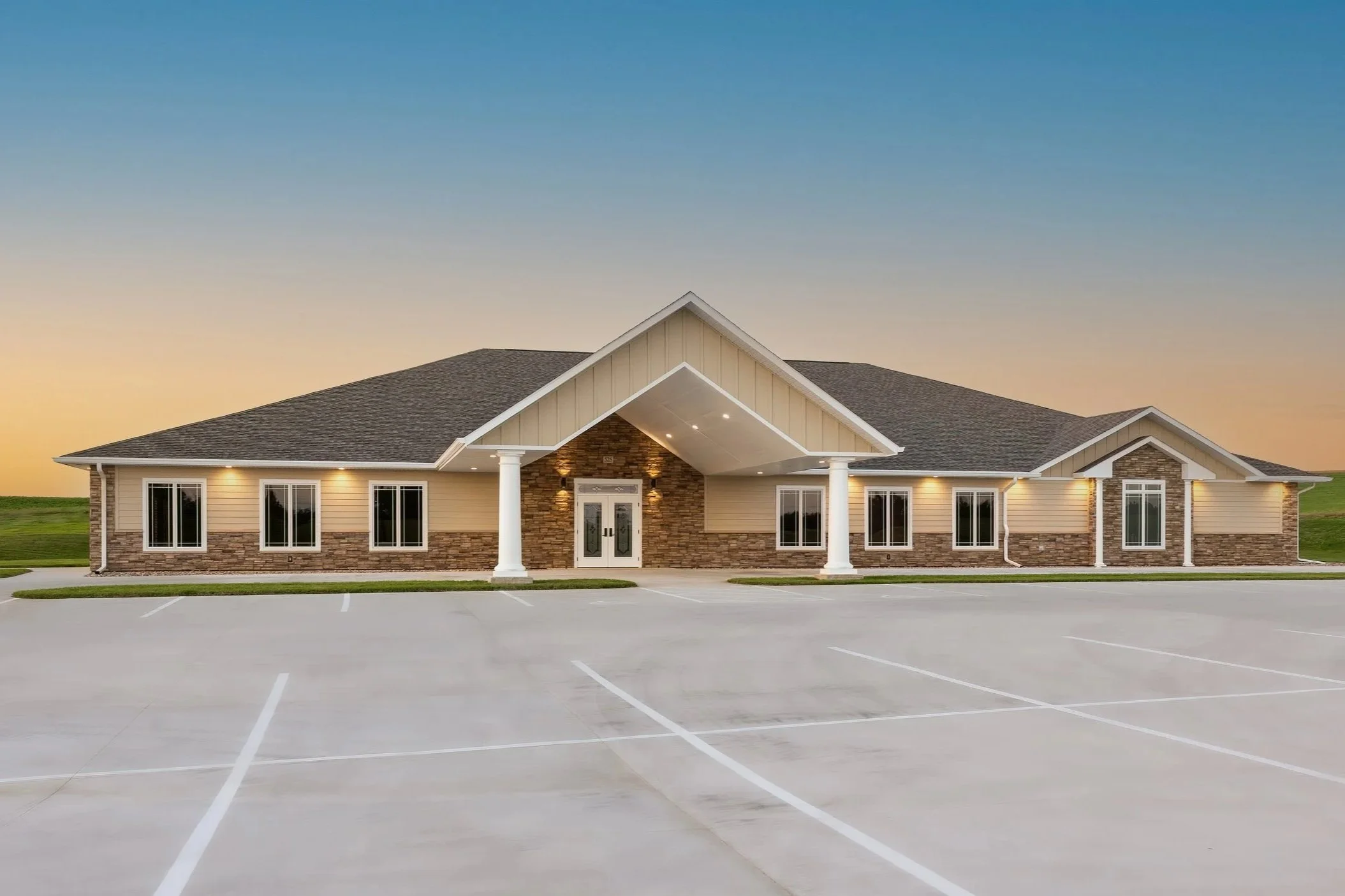
Funeral Home & Mortuary Roofing roof planning built from the roof condition.
The roof path may involve leak repair, preventive maintenance, coating review, recover planning, or full replacement depending on the age and condition of the assembly.
Commercial Roofing Contractors of Boston helps organize those choices into clear next steps for commercial buildings in Boston, MA.
Quiet, scheduled roof work for funeral homes and mortuaries across Boston — done without interrupting a single service.
A roof project nobody in the building should notice
A funeral home is never closed in the way other commercial buildings are. Visitation runs into the evening seven days a week, a service can be scheduled on two days' notice, and a death call can fill the preparation room on a Sunday morning. We treat that reality as the first line of the scope, not a complication we discover after mobilizing. Boston's funeral homes range from the long-established Catholic and Jewish chapels along Cambridge Street and around Forest Hills near the cemeteries of Jamaica Plain, to the family firms serving Dorchester, the North End, and the Italian and Irish parishes of East Boston and South Boston, to the regional chains operating purpose-built facilities along Route 9 in Brookline and out toward Watertown and Newton. Every one of them depends on the building looking dignified and staying dry on the day a family walks through the door, and our job is to keep that promise intact while we work overhead.
The preparation room sets the rules
What separates a mortuary roof from any other small commercial roof is the embalming and preparation suite directly below part of it. Those rooms run under continuous negative pressure to contain formaldehyde and other chemical vapors, and the rooftop exhaust stack that serves them cannot be capped, blocked, or shut down for our convenience. We locate that stack before anyone steps on the roof, treat its flashing as its own scope item, and confirm with the director that exhaust keeps running the entire time crews work anywhere near it. Refrigeration condensers for the preparation cooler are handled the same way — their rooftop units stay live and their curbs get re-flashed without breaking the cooling loop. This is the discipline we bring to occupied hospital and senior-living roofs, applied to a much smaller building with the same zero-tolerance for a leak over sensitive equipment.
Chapels, sanctuaries, and the old decks underneath
Many Boston funeral homes are conversions of grand 19th-century houses and former church buildings, which means the roof above the chapel or visitation hall is often a clear-span structure of 40 to 60 feet with no intermediate columns. Those spans generate real wind-uplift loads and demand a fastening pattern matched to the actual deck — wood plank, gypsum, or steel — rather than a default detail. Under a tired-looking but watertight surface membrane we frequently find saturated insulation on these older assemblies, so we core-sample and run a moisture survey before any recover decision is made. Recovering over a wet deck simply buries the problem above a room full of mourners. We would rather find it with a probe than have a family find it during a service.
The entrance everyone walks under
The porte-cochere is where families arrive and where pallbearers stage, and its roof-to-wall transition and internal drainage are the most common chronic leak source on a funeral home. We evaluate that canopy as a discrete item on every inspection, because a brown stain on a porte-cochere ceiling is exactly the detail a grieving family notices. Appearance carries weight on these buildings in a way it does not on a warehouse, so edge metal, parapet caps, and visible flashing are finished to look intentional from the street and from the parking area.
Many of these buildings also carry steep-slope features over the original residence — slate, asphalt shingle, or standing-seam sections that meet a flat addition at the back where the chapel or garage was added. Those slope-to-flat transitions are a frequent leak path, and the valley and counterflashing where the two systems meet has to be rebuilt as one continuous detail rather than patched on either side. We assess the steep-slope and low-slope portions together so the building is treated as a single watertight envelope, not two roofs that happen to touch.
How we schedule around grief, not around us
We build our work calendar from the funeral director's calendar. Active service days, visitation hours, and graveside departures are blocked off, noisy tear-off is concentrated in quiet midweek windows, and the primary entrance and chapel are kept clear and undisturbed whenever the building is open to families. Every day ends with the roof dried in and watertight, confirmed before the building closes, because a tarp that fails overnight is not an option above a casket-storage or preparation area. Whether the firm is a single family operation or part of a regional group with corporate facilities management, we work with discretion, keep crews and equipment off the front face during public hours, and leave the property looking like nothing happened except that the leaks stopped.
Funeral Home & Mortuary Roofing Questions
We schedule from the director's weekly calendar. Services, visitations, and departures are blocked out, loud work is moved to quiet midweek windows, and we never stage crew or equipment at the main entrance or in the chapel while the building is open. The roof is dried in and confirmed watertight before the building closes each day.
The exhaust stack stays running the entire project. We locate it before mobilizing, flash it as a separate scope item with the director's sign-off, and keep continuous exhaust during any work nearby. It is never capped or taken offline for roofing convenience.
For flat sections, 60-mil TPO over tapered polyiso is typical — the taper corrects the ponding common on older Boston buildings. Wood-decked chapel roofs get a load check and fastener pull-out testing before we set insulation thickness or attachment.
Yes. Appearance and discretion are part of the scope. We keep equipment off the front face during public hours, finish visible edge metal and flashing cleanly, and inspect the porte-cochere transition that families walk under, since that is the most common chronic leak point.
Yes. Condenser curbs are re-flashed without interrupting the cooling loop, the same way we treat the exhaust stack. Sensitive equipment below stays protected throughout.