

Active local weather warning
High Wind Warning: Commercial Roof Help in Boston, Chelsea, Quincy, and Revere
The National Weather Service has issued a high wind warning covering Boston, Chelsea, Quincy, and Revere. Strong winds can loosen roof edges and flashings or affect rooftop equipment. This is a weather exposure advisory; it does not establish damage to a specific roof.
Do not access a roof during hazardous weather. Protect people first, avoid water near electrical equipment, and request roofing help when conditions permit.
National Weather Service · Updated Sep 26, 2026, 5:24 PM UTC
Office Building Roofing roof planning built from the roof condition.
The review connects leak history, membrane condition, flashing details, drains, penetrations, access, and schedule constraints into a practical roof path.
Commercial Roofing Contractors of Boston keeps the next step clear for Boston, MA commercial buildings that need repair, replacement, coating, or maintenance decisions.
Commercial roof scope, documentation, access planning, and weather-aware scheduling for acrylic roof coatings.
The Prudential Center tower complex anchoring Boylston Street in the Back Bay and the State Street Corporation headquarters in the Financial District represent the pinnacle of Class A office building management in a city where roof system decisions carry implications for tenant satisfaction, building energy performance, and compliance with Massachusetts's increasingly demanding energy and sustainability regulations. Boston's commercial office market encompasses everything from the glass-curtain-wall towers of the Seaport Innovation District to the converted mill buildings in the Fenway area, and each building type presents distinct roofing challenges that require contractors with specific expertise in occupied urban office environments.
Occupied-building protocols for Boston office buildings are among the most demanding in the country because Boston's density and the value of the tenants occupying Class A office space create zero-tolerance expectations for disruption, odor infiltration, and after-hours work noise. Reroofing projects on occupied Back Bay and Financial District buildings typically operate under strict noise ordinances that restrict tear-off and mechanized work to daytime hours only, with additional restrictions in areas near residential uses. Pre-construction air quality management plans are required on most large Boston office reroofing projects to prevent solvent fumes from bituminous adhesives and primer from infiltrating air intakes and reaching occupied floors, and contractors who fail to manage this risk can face project shutdown orders from Boston ISD inspectors.
Aesthetics and green roof opportunities are highly relevant in Boston's Class A office market, where sustainability credentials are a competitive differentiator for building owners competing for the city's life sciences and technology tenants. Boston has adopted the Stretch Energy Code that requires buildings over 20,000 square feet to meet progressively higher energy performance standards, and green roof assemblies contribute to both the energy compliance strategy and the LEED certification point structure that premium Boston office buildings pursue. The city's Blue Roof and Green Roof policies, developed through Boston Planning & Development Agency guidelines for certain project types, also create pathways for incorporating stormwater management benefits into roof assembly specifications on buildings in the Boston water system service area.
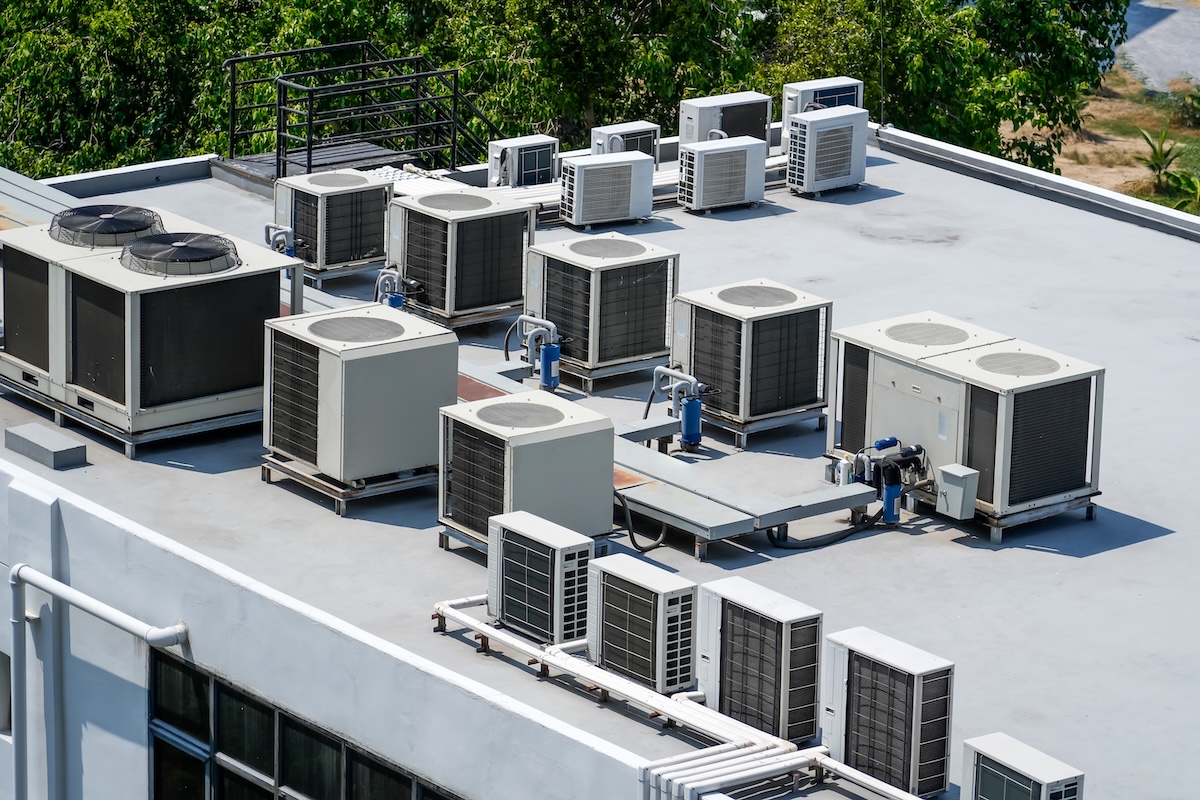
Multi-RTU coordination on Boston Class A office buildings is a significant project management challenge because large downtown office towers may have dozens of rooftop air handling units, cooling towers, emergency generator exhaust stacks, and telecommunications equipment installations that each require individual coordination with the building's operations team. Boston's union construction environment means that HVAC work on rooftop units—even temporary disconnections for membrane replacement at curb locations—must be performed by IBEW and UA local union members, adding labor cost and scheduling complexity to projects that in other markets might be handled by non-union general tradespeople. The roofing contractor's project manager must have experience navigating Boston's multi-trade union jurisdictional environment.
Massachusetts energy code compliance for commercial office buildings is governed by the state's adoption of ASHRAE 90.1 with the Stretch Code overlay required in Boston and most surrounding municipalities. Roof assembly continuous insulation requirements under this framework push polyisocyanurate board specifications to R-25 or higher for Climate Zone 5A applicable to Boston, and the thermal bridging adjustments required for mechanically attached systems mean that fully adhered assemblies often achieve better effective R-values with less total insulation thickness. Boston office building owners pursuing LEED Gold or Platinum certification should model the incremental energy benefit of insulation upgrades beyond the ASHRAE 90.1 minimum as part of their credits strategy.
Cool roof membrane selection for Boston office buildings should be made with the city's cool, overcast climate in mind. Unlike Sun Belt cities where reflective white membranes deliver unambiguous energy savings, Boston's heating-dominated climate means that a highly reflective membrane reduces passive solar heat gain through the roof in winter, creating a heating penalty that must be weighed against the summer cooling benefit. The net annual energy impact of reflective versus low-reflectance membranes in Boston is smaller than in warmer markets, and the choice between white TPO and charcoal gray TPO on a Boston office building should be informed by a building energy model run by a qualified mechanical engineer rather than defaulting to white without analysis.
Lease renewal protection through documented roof maintenance is a critical financial asset for Boston office building owners facing the city's highly competitive commercial leasing environment. A Class A tenant in the Back Bay or Seaport paying $60 to $90 per square foot annually has a reasonable expectation of a dry, well-maintained building envelope, and documented evidence that the owner has deferred roof maintenance can become a material issue in lease renewal negotiations or in the tenant's decision to exercise expansion rights. Boston's commercial landlord-tenant law provides meaningful remedies for tenants who can demonstrate that documented roof deficiencies affected their occupancy, and building owners should treat roof maintenance documentation as a risk management asset rather than an administrative burden.
Cost per square foot for office building reroofing in Boston runs $14.00 to $22.00 installed, reflecting the city's union labor rates, the complexity of multi-trade coordination in occupied downtown buildings, stringent permit requirements from Boston ISD, and the premium for air quality management plans and after-hours temporary weathering protection. Buildings in the South Boston Innovation District or the Cambridge Kendall Square area—where sustainable building credentials are part of the tenant value proposition—may specify green roof or blue-green hybrid assemblies at $30.00 to $50.00 per square foot for planted deck sections, including structural upgrades and stormwater management infrastructure.
Long-term roof asset management for Boston office buildings must account for the city's Existing Building Emissions Policy, which sets greenhouse gas emission reduction requirements for large commercial buildings that are phased in through 2050. Roof insulation upgrades are one of the lower-cost per-ton emissions reduction measures available to Boston office building owners, and scheduling insulation upgrades to coincide with otherwise-necessary reroofing projects is the most cost-effective way to meet the policy's requirements. A professional roof asset management program that tracks remaining useful life, documents energy performance improvements from past upgrades, and projects future capital requirements is a standard expectation of the institutional investors who own a large share of Boston's Class A office inventory.