

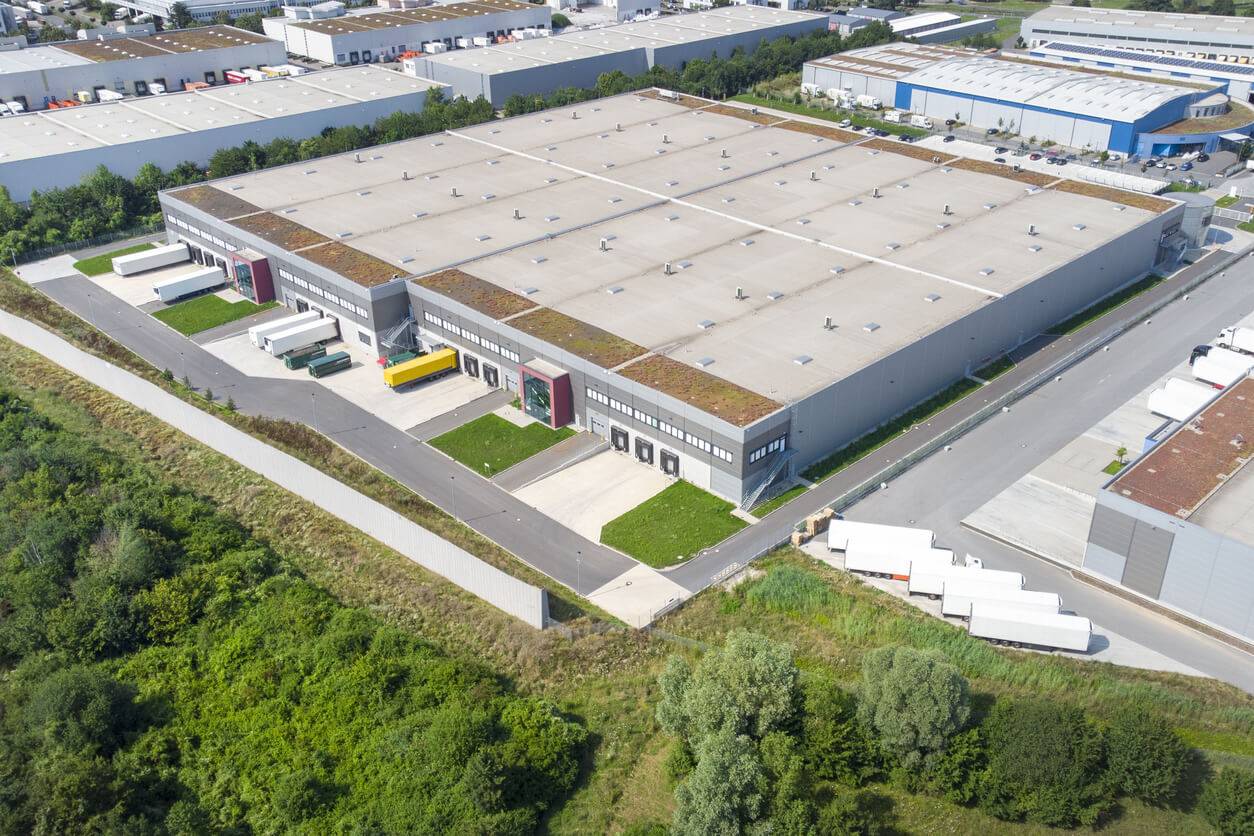
Industrial Roofing roof planning built from the roof condition.
The review connects leak history, membrane condition, flashing details, drains, penetrations, access, and schedule constraints into a practical roof path.
Commercial Roofing Contractors of Boston keeps the next step clear for Boston, MA commercial buildings that need repair, replacement, coating, or maintenance decisions.
Commercial roof scope, documentation, access planning, and weather-aware scheduling for acrylic roof coatings.
Industrial roofing in Boston occupies a market shaped by waterfront redevelopment, cold-climate performance demands, and a building stock that ranges from converted 19th-century maritime warehouses to modern Seaport District construction. The South Boston waterfront and the Innovation District have transformed former industrial land into mixed-use and tech-adjacent industrial development, while Conley Terminal at the Port of Boston continues to drive genuine heavy industrial roofing demand on the working waterfront. The Everett and Chelsea industrial corridors — fuel storage, bulk materials, and logistics operations — represent some of the most intensive industrial roofing use in the metro. And the Route 128/I-95 technology corridor, historically known as "America's Technology Highway," brings industrial-scale roofing demands for manufacturing, laboratory, and distribution facilities across the suburban ring. We work across all of these segments, and Boston's climate governs how we approach every single project.
Boston's climate is the central fact of industrial roofing here. We average 43 inches of rain annually and 43 inches of snowfall — but the numbers don't fully capture the challenge. Northeast winters subject roofing systems to severe freeze-thaw cycling, sustained snow and ice loads, and wind events off the Atlantic that generate uplift forces significant enough to test the attachment of any poorly fastened system. The winter of 2015 delivered over 108 inches of snowfall to Boston, and the structural implications for large industrial flat roofs were significant across the region. Snow load design is not an academic exercise in this market — it's a primary engineering consideration for every industrial roofing installation, new construction and re-roof alike. We design to Massachusetts State Building Code snow load requirements for each specific location, and on older industrial buildings where we have structural concerns, we recommend structural engineering review before finalizing any re-roofing scope.
Conley Terminal and the Port of Boston industrial complex have specific roofing requirements shaped by their waterfront location and heavy operational use. Port facility buildings — cargo warehouses, customs examination stations, equipment maintenance facilities — experience high levels of rooftop foot and equipment traffic, exposure to marine air, and the vibration and structural stress that comes with active port operations. We specify roofing systems for port-area industrial buildings with enhanced durability in marine environments: coastal-rated metal components, enhanced fastener corrosion protection, and membrane systems with strong puncture and tear resistance to handle maintenance traffic loads. Port facility access requires coordination with terminal operations, and our project managers engage the terminal management team in every port-area project to schedule work around vessel calls and cargo operations.
The Everett and Chelsea industrial corridors present some of the more complex industrial roofing conditions in the Boston metro. These areas include bulk fuel storage facilities, chemical logistics operations, and legacy industrial buildings that have been in continuous use for decades. Chemical compatibility is a relevant concern for buildings in the Everett fuel and chemical storage corridor, and we evaluate each building's exposure environment before specifying membrane systems in these areas. The combination of marine proximity, industrial chemical exposure, and harsh winter climate in Everett and Chelsea demands careful materials specification — components that are adequate in one of those conditions may fail under the combined stress of all three.
For Boston's industrial flat and low-slope roofs, we install TPO, EPDM, modified bitumen, and metal systems matched to building conditions. EPDM has an excellent track record in cold-climate industrial applications — it remains flexible at low temperatures, handles thermal cycling well, and is field-fabricable in a way that accommodates the complex penetration conditions common in older industrial buildings. TPO with heat-welded seams performs well on modern industrial construction and large new distribution facilities where seam durability and reflective energy performance are priorities. Modified bitumen in two-ply systems is the right answer for buildings with complex drainage requirements, irregular surfaces, or high penetration density where the field fabrication flexibility of sheet goods outperforms factory-controlled installation. Metal systems — standing seam and R-panel — are appropriate for new construction and re-roofing over existing metal on buildings in the Route 128 technology and industrial corridor.
Ice dam formation is an industrial roofing concern in Boston that deserves specific attention. While ice dams are most commonly discussed in the context of residential steep-slope roofs, they also affect low-slope industrial roofs along parapet walls and roof edges. Insulation inadequacy — either insufficient R-value or thermal bridging through structural members — allows heat to escape through the roof surface, creating melt-and-refreeze cycles at the cold perimeter that can force water under membrane terminations. On industrial buildings with high internal heat loads, this effect is amplified. Proper insulation design and air sealing at the roof-to-wall transition are the engineering controls, and they need to be addressed as part of the re-roofing project, not after the fact when ice dam damage has already occurred.
The Route 128/I-95 technology corridor represents a specialized segment of the Boston industrial roofing market. Technology and life science manufacturing facilities in this corridor often have complex rooftop mechanical systems, laboratory exhaust requirements, and specialized penetration conditions that differ from standard warehouse or production buildings. Many of these buildings are occupied by tenants whose operations are sensitive to moisture intrusion — a lab building or semiconductor facility can suffer disproportionate operational damage from even a minor roof leak compared to a warehouse. We treat these buildings with the same technical rigor we apply to petrochemical or port-area industrial work, because the consequences of roofing failures are similarly serious even if the hazard environment is different.
Snow removal coordination is a Boston-specific service consideration for large industrial flat roofs. After major snowstorms, when accumulation approaches design load thresholds on older buildings, we coordinate with facility management on snow removal protocols — and critically, we advise on how to remove snow without damaging the membrane system. Shovels and snowblowers on a membrane roof require equipment and techniques that don't damage the surface. We've seen more membrane damage from improper emergency snow removal in Boston winters than from actual storm conditions, because the person removing snow doesn't always know what's under their feet. We can provide facility managers with specific protocols for their roof system and, when needed, provide crews for emergency snow removal after major events.
Boston's industrial building stock includes a significant portion of adaptive reuse — former warehouse and manufacturing buildings converted to mixed-use, creative office, and light industrial occupancies in the Innovation District, South Boston, and the inner suburban ring. These conversions frequently involve rooftop additions — mechanical penthouses, rooftop terraces, solar installations — that create new penetration conditions and load additions to roofs that were originally designed for different parameters. We work with architects, developers, and building owners on rooftop modification projects to ensure that new penetrations are properly flashed, new loads are structurally supported, and the existing membrane system is properly integrated with any new construction. Getting this integration right at the time of modification prevents the problems that appear later when the two systems aren't properly connected.
We've built our practice in the Boston industrial market on cold-climate technical expertise, waterfront and marine-environment experience, and the project management capability to work in complex industrial access environments. Whether you're managing a Conley Terminal-area industrial facility, a Route 128 technology campus, an Everett fuel logistics operation, or a Seaport District building, we have the experience to give you an accurate assessment and a roofing program that will hold up under what Boston's climate and your operations actually deliver. Contact us to schedule an inspection.
Massachusetts Building Code establishes ground snow load values for each municipality, and the roof snow load design is derived from that value with adjustments for roof geometry, exposure category, and occupancy. For Boston proper, the ground snow load is 30 psf; suburban communities can vary. On a large flat industrial roof, the design roof snow load typically falls in the 20-25 psf range after code adjustments, but drifting at parapets, mechanical equipment windward faces, and level changes can create localized drift loads significantly higher than the balanced load design value. We review structural documentation and current snow load standards on every industrial re-roofing project to ensure the building's capacity is adequate. On older industrial buildings where structural documentation is limited, we recommend having a structural engineer confirm capacity before we add insulation thickness or other dead load.
Massachusetts's energy code (based on IECC requirements for Climate Zone 5A) requires a minimum of R-25 for commercial/industrial low-slope roofs in new construction and major renovation. For most industrial buildings on Route 128, we recommend R-25 to R-30, with the higher value appropriate for buildings with sensitive operations, high energy costs, or significant internal heat generation. The insulation assembly design — polyiso in multiple layers with staggered and offset joints — is as important as total R-value for preventing thermal bridging. On re-roofing projects where we're removing and replacing insulation, we upgrade to current energy code minimums as a baseline and discuss higher R-value options with ownership where the energy economics support it. Higher insulation also reduces ice dam risk at the perimeter, which is a material performance benefit in Boston's climate beyond the energy savings.
Yes. Buildings in the Everett fuel and chemical logistics corridor should be evaluated for chemical exposure compatibility before any membrane system is specified. The specific concern is hydrocarbon vapor exposure from adjacent fuel storage and handling operations, which degrades certain membrane formulations — particularly standard commercial TPO — over time. EPDM with appropriate chemical resistance ratings or modified bitumen systems are typically the better choice for buildings in direct proximity to fuel storage. Beyond membrane chemistry, metal components need to be specified for both marine air and chemical exposure corrosion resistance, which is a more demanding specification than either condition alone. If you're unsure whether your current membrane is appropriately specified for your location, we can inspect it and look for the early-stage degradation indicators that suggest a compatibility problem.
Emergency response in Boston winter conditions requires roofing contractors with cold-climate field capability — the ability to apply membrane and flashing materials in cold temperatures, work safely on snow and ice-covered roof surfaces, and provide temporary waterproofing that will hold until a permanent repair can be made under better conditions. We maintain emergency response capability through the winter and can mobilize quickly for active industrial facility leaks. Temporary repairs — elastomeric coating over the leak area, temporary membrane patches — can stop interior damage while weather conditions are unsuitable for permanent work. We then follow up with a permanent repair when temperature and surface conditions allow proper adhesive bonding and membrane integration. For critical industrial operations, we prioritize response to active leaks and will communicate honestly about what can be done as a temporary measure versus what requires better conditions for permanent work.
Solar installation coordination on industrial roofing is something we handle regularly on the Route 128 corridor. The key considerations are: structural capacity for the additional dead load of the panels and racking system; penetration design for mechanically anchored racking versus ballasted non-penetrating systems; membrane compatibility with the racking system's foot pads; and the long-term serviceability of the roof under the solar installation. We strongly recommend involving the roofing contractor in solar coordination before the solar design is finalized — the solar contractor's preferred racking layout may conflict with drainage design or place penetrations in locations that create flashing challenges. We've seen solar installations that were designed without roofing input that created drainage problems and penetration conditions that compromised the roof's long-term performance. Early coordination between the roofing and solar teams prevents those problems.