
The claim moves on the strength of the report, not the strength of the argument.
Most delays in a commercial roof claim come down to documentation, not disagreement. An adjuster with a clear set of photos, moisture readings, and a written scope can move a claim through review faster than one working from a vague description of "storm damage." This is the paperwork side of a claim — the inspection report and evidence that supports whatever the owner or their adjuster does next.
We are a roofing contractor, not a public adjuster. This service is the inspection and documentation itself — the report, photos, and moisture data that go into a commercial roof insurance claim. We don't file the claim or negotiate with the carrier; we produce the evidence that makes the claim defensible.
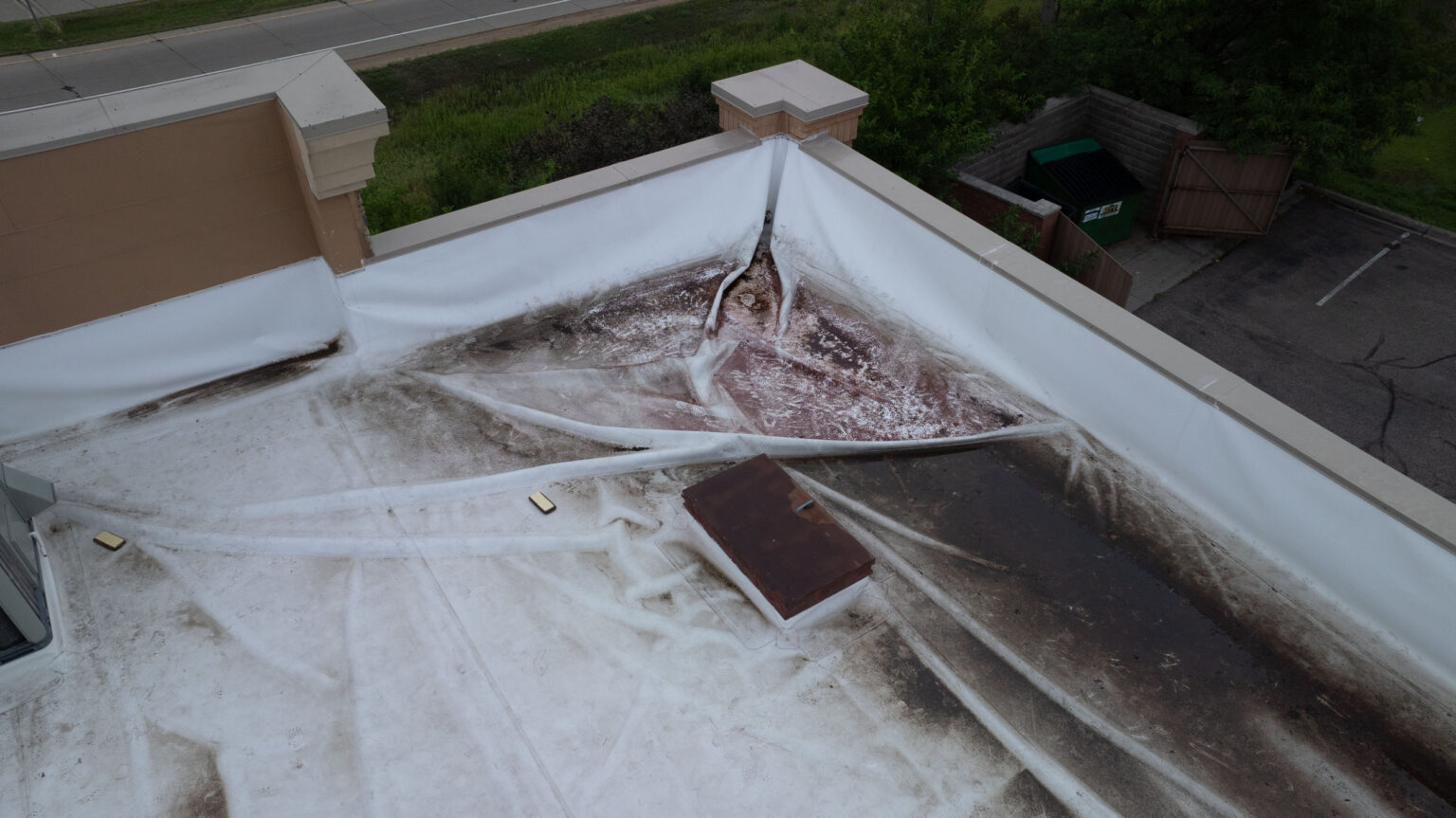
A useful report separates categories cleanly: active leaks, storm-caused damage, pre-existing wear, and prior repairs that are holding up fine. Mixing those together is how claims get pushed back for clarification. We tag each finding to a location on the roof, note whether it's storm-related or not, and back it with a photo and, where relevant, a moisture reading.
What goes into the report
Dated, location-tagged photos of every finding — not a handful of representative shots but coverage of each area with damage. Moisture survey results across the field of the roof, beyond the spot where the interior leak showed up. Drainage condition at every primary and overflow point. Flashing and coping condition at parapets, curbs, and penetrations. And a written scope that separates immediate repair items from anything that needs further investigation, like a core cut to confirm wet insulation.
Boston's building stock makes that separation especially important. A Financial District tower with a modern single-ply roof documents very differently than an older commercial building in Fort Point or the Leather District with a built-up roof under decades of recover layers. We read each roof on its own history rather than applying a generic checklist.
When this documentation gets used
Sometimes we're the first inspection after a storm, building the initial record. Sometimes we're brought in as a second opinion when a carrier's estimate looks thin compared to what's actually on the roof — missing code-required upgrades, missing matching allowances, or missing wet insulation that wasn't caught on a quick walk. Either way, the report is written to hold up under a closer look, beyond supporting a first impression.
Coastal weather and the documentation trail
Boston's harbor exposure and winter freeze-thaw cycles mean roof damage doesn't always show up the same day as the storm. Wind-driven rain during a nor'easter can work into a seam that doesn't fail until weeks later, and ice dam damage from January can surface as a leak in March. We note storm dates alongside the physical evidence so the timeline in the report matches what an adjuster or carrier expects to see.
What this documentation doesn't include
We don't estimate settlement values, argue coverage interpretation, or represent the owner in disputes with the carrier — that's the work of a public adjuster or attorney, and we stay out of it. What we provide is the technical roof record: what's damaged, how it likely happened, and what it will cost to repair or replace correctly.
Questions We Answer Before Work Starts
What's included in a roof insurance claim documentation report?
Dated, location-tagged photos of the damage, moisture survey results, drainage and flashing notes, and a written repair or replacement scope that separates storm damage from pre-existing wear.
Can this documentation be used with a claim that's already open?
Yes. We can inspect and document at any point in the claim process, including as a second opinion if the carrier's initial estimate looks incomplete.
Do you provide documentation for claims outside of Boston proper?
We document commercial roofs across the Boston metro, including Cambridge, Back Bay, the Seaport, and surrounding neighborhoods.
How long until we receive the written report?
Straightforward single-building reports are typically ready within a few business days of the inspection. Larger portfolios or roofs needing core cuts for moisture confirmation take longer.
Will you testify or provide a statement if the claim is disputed?
We can provide our inspection notes, photos, and technical explanation of the findings to whoever is handling the dispute. We don't represent either side in a coverage dispute.
We're your roofing contractor, not a public adjuster — we document and substantiate the roof damage so you and your adjuster work from an accurate scope.