

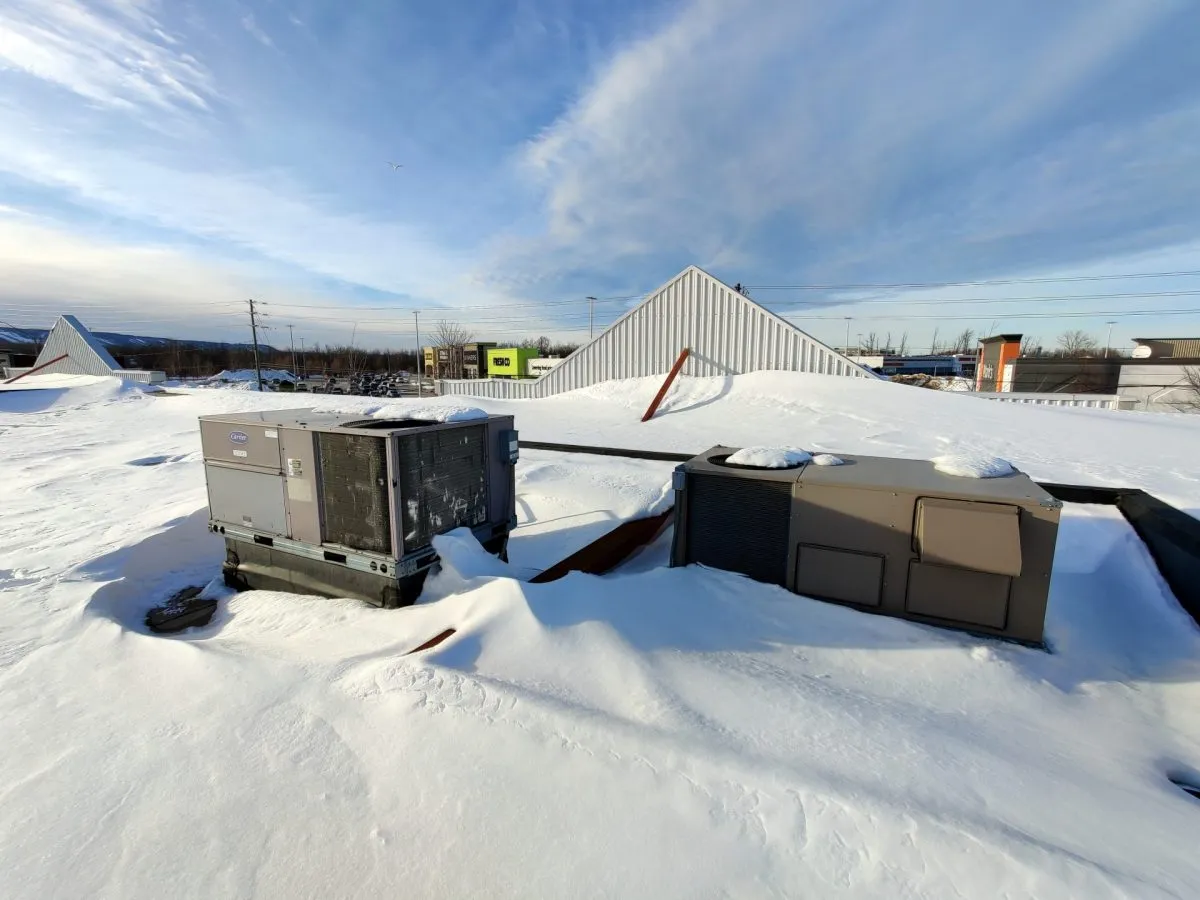
Ice dam and snow-load damage rarely announces itself the day it happens.
A leak that shows up in February after a January nor'easter is a hard thing to document from memory. By the time water reaches a ceiling tile on the third floor of a Back Bay office building, the ice dam that caused it may already be melted. Our documentation work on Boston snow and ice roof damage claims starts with reading the physical evidence that's still on the roof — ponding lines, membrane displacement, flashing movement — and connecting it back to the storm.
We are a roofing contractor, not a public adjuster. Our part in a snow or ice damage claim is inspecting the roof, documenting what we find with photos and moisture readings, and writing a scope that covers the actual repair — not filing the claim or negotiating with the carrier. That stays with the owner or whoever they've engaged to handle the claim itself.
Boston's low-slope commercial roofs are built for drainage, and ice dams defeat that design by damming meltwater behind a ridge of ice at parapets, drains, and roof edges. On buildings from the Fenway to Charlestown, we've seen the same pattern repeat: snow melts from rooftop equipment heat or daytime sun, refreezes overnight at the cold edge, and the next melt cycle backs water up under lapped seams instead of letting it drain. On older built-up and modified bitumen roofs common on commercial space converted from triple-decker-era buildings in the South End and Dorchester, that backed-up water finds its way through aged laps that a summer inspection would never flag.
What we document for a snow or ice claim
We check primary and overflow drains and scuppers for ice blockage, look for membrane and flashing displacement at the roof edge and around penetrations, take moisture readings across the field of the roof to map wet insulation, and photograph ponding lines and ice residue where they're still visible. If snow load caused visible deflection in the deck or structure, we document that separately and recommend a structural review before any roof work begins.
Interior evidence matters too. Ceiling stains, damaged insulation, and moisture at penetrations inside the building often line up with a specific roof-level cause once we're up there with the interior photos in hand. We connect the two so the claim isn't relying on the interior damage alone.
Freeze-thaw damage from earlier in the season
Boston gets more than one freeze-thaw cycle in a typical winter, and each cycle works ice further into small cracks, open laps, and joints at coping and counterflashing. Damage from a January cold snap can still be showing up as a leak in March. We can document that kind of cumulative damage weeks after the fact — the physical evidence (cracked sealant, displaced coping, wet insulation found on a core cut) doesn't disappear once the ice melts, even if the visible ice does.
Meeting the adjuster after a winter event
When we walk a snow or ice claim with an adjuster, we point out where the drainage system was overwhelmed, where flashing moved, and where the moisture survey shows wet insulation, and we explain how that connects to the storm event. We don't argue what the carrier should pay for it — we make sure the technical picture of the roof is accurate before that conversation happens.
A note on snow removal
If a roof still has significant snow or ice load when we're called, we'll talk through whether removal is a life-safety issue before documentation happens, because clearing the roof can also clear the evidence of where the ice dam formed. Where it's safe to wait, we document first.
Complete scope for a snow or ice claim means nothing legitimate gets left off — drain and scupper repair, flashing repair or replacement, wet insulation replacement, and any code-required upgrades triggered by the repair. It does not mean treating unrelated wear as storm damage.
Questions We Answer Before Work Starts
Does commercial property insurance cover ice dam damage?
Many commercial policies cover sudden water damage from ice dams and roof collapse from excess snow load, though gradual-water-intrusion language varies by carrier. We document where and how the water entered so the owner and adjuster have the facts to apply the policy to.
How do you tell ice dam damage apart from an unrelated leak?
We trace the water path from the interior stain back to the roof, checking drains, parapet returns, and low points against the pattern ice dams typically create at the roof edge, and confirm with moisture readings and a physical inspection.
Should I remove snow from my roof before you inspect it?
Not before we've had a chance to document conditions, unless the load is a life-safety concern — snow removal can obscure where the ice dam formed and where the membrane was damaged.
What does a snow-load or ice dam damage claim usually need?
Photos of ponding, ice buildup, and any structural deflection, moisture readings at suspect areas, drain and scupper condition, and a written repair scope tied to the specific damage found.
Can refreeze damage from an earlier storm still be documented weeks later?
Often yes. Wet insulation, membrane displacement, and flashing movement from a freeze-thaw event usually leave physical evidence that a moisture survey and core cuts can still identify well after the ice has melted.
We're your roofing contractor, not a public adjuster — we document and substantiate the roof damage so you and your adjuster work from an accurate scope.